5 Expression Systems
>95% Purity Specification
µg to kg Scale
GMP via Partners
Sequence & Activity QC
Service Overview
Comprehensive Protein Expression for Every Research Need
ICDMO's recombinant protein expression services deliver high-quality proteins for structural biology, drug target validation, antibody development, enzyme engineering, and biopharmaceutical manufacturing. Five orthogonal expression platforms operate in parallel, enabling our scientists to match the optimal system to each target based on size, glycosylation, disulfide bonds, and required quantity.
Our pipeline integrates codon optimization, vector engineering, fermentation or cell culture scale-up, and multi-step chromatography into a seamless one-stop service. Every batch undergoes rigorous QC before delivery.
1,000+
Proteins Expressed
>95%
Typical Purity
19+
Years Experience
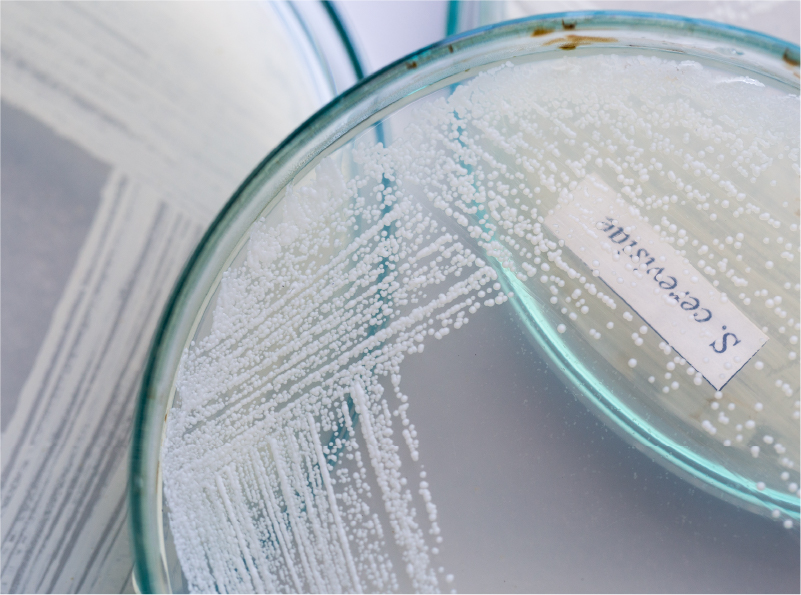
Expression Systems
Five Platforms, One Partner
Each system is maintained by dedicated protein scientists with platform-specific expertise.


Key Advantages
Multi-System Expertise
Five expression platforms available through our partner network. Our scientists match the system to your target's requirements and application, and run the sequence analysis behind that choice.
High Purity Specification
Multi-step chromatography is run against a >95% purity and <1.0 EU/µg endotoxin specification, with an SEC-HPLC purity profile included for every batch.
Flexible Scale
Microgram quantities for structural studies through kilogram-scale GMP manufacturing for clinical programs.
Comprehensive QC
SDS-PAGE, Western blot, SEC-HPLC, LC-MS, DLS, endotoxin, bioactivity assay, and full CoA documentation.
Rapid Feasibility
Our own bioinformatics analysis flags solubility, domain-boundary and expression challenges before the project starts, so timeline risk is understood up front.
GMP Capability
GMP production is arranged through qualified partner facilities, which supply the batch records and regulatory documentation required for IND programmes.

What We Offer
Custom Protein Production
▸Enzymes, receptors, antibody fragments, growth factors, cytokines, structural proteins
▸Soluble, secreted, or inclusion body refolding depending on system and target
▸Membrane protein expression with detergent or nanodisc reconstitution
▸Multi-subunit complex co-expression using polycistronic vectors or co-infection
Protein Purification
▸Affinity: IMAC (His), GST, MBP, Strep-tag, antibody affinity chromatography
▸Ion exchange (IEX) and hydrophobic interaction (HIC) polishing steps
▸Size-exclusion chromatography (SEC) for aggregate removal and oligomeric profiling
▸TEV / thrombin protease tag removal and re-purification of tag-free product
Analytical & Quality Services
▸SDS-PAGE (reducing & non-reducing), Western blot for identity confirmation
▸SEC-HPLC purity profile; LC-MS / MALDI-TOF for molecular weight verification
▸DLS for hydrodynamic radius; LAL endotoxin assay (<1.0 EU/µg standard)
▸Bioactivity assay design: enzyme kinetics, ELISA, SPR, cell-based functional assays
Service Workflow
1
Sequence Analysis & Strategy
Bioinformatics review: signal peptide, TM domains, disulfide bonds, glycosylation sites. System, vector, and tag strategy recommended.
2
Vector Construction
Codon-optimised gene cloned into an optimised expression vector. Tag position and protease cleavage site (TEV/thrombin) selected for downstream use.
3
Small-Scale Screening
Expression tested across temperatures, inducers, and media. Solubility and yield confirmed by SDS-PAGE and Western blot before scale-up.
4
Scale-Up Production
Optimal condition applied at production scale — shake flask, bioreactor, or spinner flask. Monitored throughout for yield and cell health.
5
Purification
Multi-step chromatography: affinity capture → IEX polishing → SEC finishing. Optional tag removal by protease digestion and re-purification.
6
QC & Delivery
SDS-PAGE, SEC-HPLC, LC-MS, endotoxin LAL. Shipped on dry ice with CoA, sequence trace, and full data package.
Service Process
1
Online Consultation
›
2
Solution Matching
›
3
Service Contract
›
4
Project Execution
›
5
Data Delivery
Specifications & Turnaround
Note: All services are for research use only unless specified as GMP. Contact us for IND-enabling or clinical manufacturing documentation.
What Published Work Reports
The results below were published by independent groups and are cited to show what these computational approaches have achieved in the literature. They are not ICDMO project results, and outcomes vary substantially between targets, datasets and programmes. We do not promise comparable results for any particular project.
Machine-learning-guided evolution raised a reaction yield from 12% to 93%
An active-learning workflow optimising five interacting active-site residues improved the yield of a desired non-native cyclopropanation product from 12% to 93% in three rounds of laboratory experimentation. The design principle is the one we apply: computation chooses which small set of variants to make, and measured results retrain the model between rounds.
Nature Communications, 2025 ↗1.6- to 42-fold activity improvements from model-selected enzyme variants
A machine-learning-guided enzyme engineering campaign evaluated 1,217 variants across 10,953 reactions to build predictive models for amide synthetases. Model-selected variants showed 1.6- to 42-fold improved activity relative to the parent enzyme across nine pharmaceutical targets, illustrating both the scale of data that makes models predictive and the spread of outcomes that remains.
Nature Communications, 2024 ↗De novo binder design succeeds at rates that vary enormously by target
Recent design methods report nanomolar binder hit rates between roughly 17% and 82% across evaluated targets, while independent evaluations of earlier pipelines on other targets report designs failing on expression, non-specific binding or undetectable affinity. The honest reading is that de novo binder design now works, that success is strongly target-dependent, and that panels must be sized accordingly rather than on a best-case figure.
Comparative design studies, bioRxiv, 2025 ↗What We Need From You
▸Target protein sequence with species, isoform, domain boundaries and any tags already planned
▸The intended application — structural study, assay reagent, immunogen, therapeutic material — and the quantity required
▸Required post-translational modifications, disulfide content and whether native glycosylation matters
▸Previous expression attempts with the system used, the outcome and where the protein failed
▸Any constraints on host system, media, tags or purification chemistry
How the Work Is Performed
▸Sequence analysis: signal peptides, transmembrane segments, disorder, low-complexity regions and rare codons
▸Solubility and aggregation propensity prediction across the sequence, with the problem regions localised
▸Construct design: domain boundaries, truncations, tag choice and position, linker and protease site selection
▸Expression system matching based on modification requirements, disulfide content and intended use
▸Codon optimisation for the chosen host with GC content, repeat and structure checks on the mRNA
▸Purification strategy design, including tag removal and the polishing steps needed to meet the specification
What You Receive
▸Ranked construct designs with boundaries, tags and linkers fully specified for synthesis
▸Solubility and aggregation assessment with the regions responsible identified
▸Expression system recommendation with the reasoning and the fallback option
▸Codon-optimised sequences ready to order, with the optimisation criteria documented
▸Proposed purification scheme and the analytics needed to confirm the specification
Interpretation and Limitations
Solubility and expression prediction rank constructs and identify likely problems; they do not guarantee yield. Expression outcomes remain substantially empirical and depend on host strain, induction conditions, media and scale. We therefore design several constructs to be tested in parallel rather than a single one. Expression, purification and analytics are executed through qualified partner laboratories.
Questions We Are Asked Before Scoping
How many constructs should we test?
Three to six in parallel is usual. Because expression cannot be predicted reliably, a small parallel screen of well-designed constructs reaches a working protein far faster than optimising one construct serially.
Can you rescue a protein that will not express?
Often. The usual causes are unsuitable domain boundaries, an aggregation-prone region, a tag interfering with folding, or a host mismatch for the disulfide or modification requirements. We analyse the sequence and say which applies.
Do you perform the expression work?
No. ICDMO delivers the computational design: construct, codon optimisation, system selection and purification strategy. The laboratory work is carried out by partner facilities and scoped separately.
Get a Custom Quote
Protein scientists respond within 24 hours with a feasibility assessment and detailed proposal.
Contact Us Online ConsultationStandard Deliverables
✓Purified protein (specified qty)
✓SDS-PAGE & Western blot
✓SEC-HPLC purity profile
✓LC-MS MW confirmation
✓Endotoxin test report
✓Certificate of Analysis (CoA)
Why ICDMO?
5 Expression Systems Supported
Expression & Solubility Prediction
GMP Through Qualified Partners
Full Analytical QC Package
Computational CDMO Focus