1,000
Variants / Run (HT)
HPLC ≥95%
Purity Specification
4 Species
Human / Mouse / Rat / Rabbit
≤2 EU/mg
Endotoxin Specification
5 Days
Fastest Turnaround
Service Overview
From Discovery to High-Purity Recombinant Antibody Production
Recombinant antibody technology enables precise sequence-defined production of any antibody format — full-length IgG, Fab, scFv, bispecific, or nanobody — independent of animal immunization timelines. By modifying antibody-encoding genes using recombinant DNA and protein engineering, followed by optimized mammalian cell expression and multi-step chromatographic purification, ICDMO delivers research-grade and therapeutic-grade antibodies with consistent quality across batches.
ICDMO coordinates two complementary production tracks: a High-Throughput service processing up to 1,000 constructs per run in HEK293 cells for rapid screening, and a Scale-Up service delivering multi-gram quantities with HPLC ≥95% purity and endotoxin ≤2 EU/mg for lead candidate development and in vivo studies.
Suitable For
High-throughput screening of antibody variant libraries (up to 1,000/run)
Recombinant IgG, Fab, scFv, bispecific, and nanobody formats
Human, Mouse, Rat, and Rabbit species IgG subclasses
Therapeutic lead candidate production (HPLC ≥95%, low endotoxin)
In vivo efficacy and PK/PD studies requiring sterile, QC-verified antibody
Biosimilar comparability and formulation development studies
Antibody–drug conjugate (ADC) and ADC payload evaluation
Diagnostic antibody reagent production with batch-to-batch consistency
Service 01
High-Throughput Recombinant Antibody Production
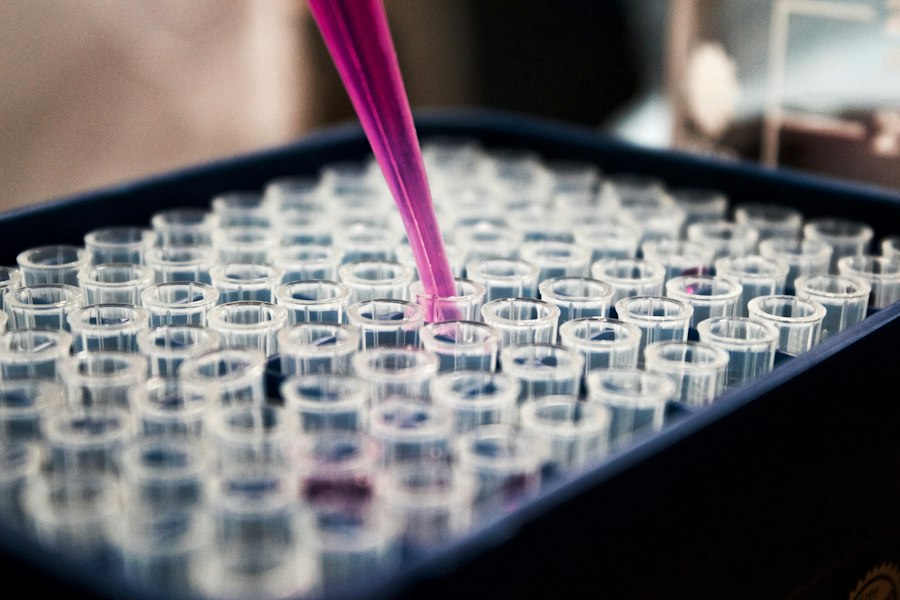
As biological drug development accelerates, demand for high-throughput antibody preparation has grown dramatically. ICDMO's HEK293-based high-throughput platform supports transient expression and magnetic bead purification of hundreds of antibody constructs simultaneously — enabling rapid screening of antibody libraries and variant panels within days.
High-Throughput
Automated purification instruments support simultaneous high-throughput processing. Up to 1,000 constructs produced per run on a single instrument.
Fast Turnaround
Magnetic bead purification system combined with automated instruments enables rapid preparation. Purified antibody delivered within 5 days for 1–100 constructs.
High Quality
Preparations are released against defined HPLC purity and endotoxin specifications — suitable for binding assays, SPR, BLI and cell-based screening without additional clean-up.
Production Workflow
1
Plasmid Preparation
2
Animal Cell Host (HEK293)
3
Transient Transfection
4
Expanded Culture
5
Magnetic Bead Purification
6
QC Screening
Service 02
Scale-Up Recombinant Antibody Preparation
ICDMO coordinates antibody production across the full spectrum of quantity requirements — from milligrams for early characterisation to multi-gram batches for in vivo studies and pre-clinical programmes. Expression is performed to your specification through qualified partner facilities, with yield expectations and release criteria agreed in the statement of work.
01
01
Gene Synthesis & Vector Construction
Timeline
1–2 weeks
Gene synthesis with codon optimization for HEK293 expression
Antibody sequence cloning into a high-expression mammalian vector
Sequence verification by Sanger sequencing
Plasmid maxiprep preparation to GMP-grade endotoxin specification
Deliverable:Complete gene synthesis with expression vector
02
02
Small-Scale Expression Analysis
Timeline
1–2 weeks
Transient transfection in HEK293 cells at small scale (50–100 mL)
Expression level analysis by ELISA and SDS-PAGE / western blot
Purification by Protein A/G affinity; SEC to assess aggregation
QC confirmation before proceeding to scale-up production
Deliverable:Expression analysis report + electrophoresis data
03
03
Scale-Up Production & Purification
Timeline
1–2 weeks
Flask- to bioreactor-scale production in HEK293 or CHO suspension cells
Primary purification by Protein A affinity chromatography (ÄKTA system)
Endotoxin removal by ion-exchange chromatography (Capto Q / SP)
SEC-HPLC polishing to remove aggregates and achieve monomer >95%
Deliverable:Purified antibody protein (delivered on dry ice)
04
04
Secondary Purification & QC (Optional)
Timeline
2 weeks
Multi-step chromatography: ion exchange + size-exclusion polishing
Closed UV-sterilization system; all operations under sterile conditions
HPLC purity ≥95% target specification; endotoxin ≤2 EU/mg (LAL assay)
Final QC package: SDS-PAGE, SEC-HPLC, ELISA activity, endotoxin report
Deliverable:HPLC ≥95% antibody; endotoxin ≤2 EU/mg
Why Choose ICDMO
Service Advantages
High-Throughput Capability
Automated purification instruments and HEK293 magnetic bead systems support simultaneous processing of up to 1,000 antibody variants per run — ideal for library screening and hit validation campaigns.
Multi-Species Expression
Extensive experience expressing Human, Mouse, Rat, and Rabbit IgG subclasses (IgG1, IgG2, IgG4), as well as Fab, scFv, bispecific, and nanobody formats in HEK293 and CHO systems.
HPLC ≥95% Purity Specification
Scale-up batches run Protein A affinity, ion-exchange and SEC polishing against an HPLC ≥95% purity specification, with the release criteria agreed before production begins.
Sterile & Low Endotoxin
Fully closed UV-sterilization production environment. All antibody preparations routinely achieve endotoxin ≤2 EU/mg by LAL assay — suitable for in vivo functional studies and IND-enabling work.
Microgram to Gram Scale
Flexible production scale from microgram quantities for early binding characterization through multi-gram batches for in vivo efficacy studies — all produced under the same QC framework.
Fast 5-Day Delivery
High-throughput recombinant antibody expression supernatant or purified protein can be delivered within 5 business days for batches of 1–100 constructs, supporting rapid iterative screening cycles.
Case Study
Representative Production Results
Full Service Portfolio
All Antibody Discovery & Development Services
Custom Antibody Development
Polyclonal, monoclonal, and recombinant antibody generation against any target antigen — peptide, recombinant protein, cell, or VLP.
Monoclonal Antibody (mAb)
Hybridoma-based and recombinant mAb generation in murine and rabbit systems with high epitope specificity and batch consistency.
Bispecific Antibody
IgG-like bispecific antibody design and production using knob-into-hole, CrossMab, and tandem-scFv formats for dual-target engagement.
VHH / Nanobody Development
AI-assisted camelid-derived VHH nanobody discovery, humanization, and expression — the smallest fully functional antibody format.
Antibody Humanization
CDR grafting, back-mutation optimization, and in silico immunogenicity scoring to convert murine antibodies to therapeutic-grade human frameworks.
Frequently Asked Questions
Note: All antibody production services are for research use unless otherwise stated. GMP-grade production is available upon request with additional regulatory documentation. Contact us to discuss your specific requirements.
Get a Production Quote
Share your antibody sequence, format, and quantity requirements. Our team will respond within 24 hours with a detailed quote and timeline.
Contact Us Online ConsultationStandard QC Package
✓SEC-HPLC purity trace (≥95% monomer)
✓SDS-PAGE (reducing & non-reducing)
✓Endotoxin report by LAL assay
✓Protein concentration (A280 & BCA)
✓ELISA binding activity confirmation
✓Certificate of Analysis (CoA)
✓Stability data on request
Quick Inquiry
What We Need From You
▸Antigen sequence and, where available, structure, with the species and isoform you intend to target
▸The application: therapeutic, diagnostic, imaging or research reagent, since each sets a different developability bar
▸Any existing binders, immunisation history or display campaigns, including what failed and at which step
▸Format requirements — IgG subclass, fragment, single domain, bispecific — and effector function expectations
▸Quantity, purity and endotoxin specifications for any material to be produced through partners
How the Work Is Performed
▸Antigen analysis: domain boundaries, glycosylation, disorder, conservation and surface accessibility
▸Epitope and immunogenicity assessment to guide immunogen or panning strategy
▸Variable domain and antigen complex modelling once candidate sequences exist
▸Repertoire triage: clustering, germline assignment and liability screening across sequencing output
▸Developability assessment covering aggregation, charge patches, chemical liability motifs and thermal risk
▸Format and expression construct design, with the partner-executed production plan specified
What You Receive
▸Antigen and epitope assessment with annotated structural figures
▸Ranked candidate list with clustering, germline assignment and developability scoring
▸Structural models of the leading candidates and, where the epitope is known, of the complex
▸Format and construct recommendations with the reasoning and the alternatives considered
▸A prioritised production and characterisation plan for execution with your team or a partner
Interpretation and Limitations
Computational assessment improves the odds of an antibody campaign and removes obviously problematic candidates; it does not determine whether an animal or a library will produce binders. Developability scores indicate risk rather than outcome, and predicted affinity is not reliable enough to act on without measurement. Immunisation, display selection, expression and characterisation are executed by qualified partner laboratories and scoped separately.
Questions We Are Asked Before Scoping
Where does ICDMO sit in an antibody programme?
We handle the computational layer: antigen and epitope analysis, immunogen design, sequence triage, modelling, developability and format engineering. The laboratory work runs through qualified partners and is coordinated with you.
Can you assess candidates we already have?
Yes, and it is one of the highest-value uses of computation here. Triaging a panel before expression usually removes a meaningful fraction that would have failed later on aggregation, chemical liabilities or poor humanness.
How long does a full campaign take?
The computational stages run in days to weeks. The overall timeline is set by the laboratory work, which we plan alongside you rather than quote in isolation.
What Published Work Reports
The results below were published by independent groups and are cited to show what these computational approaches have achieved in the literature. They are not ICDMO project results, and outcomes vary substantially between targets, datasets and programmes. We do not promise comparable results for any particular project.
10- to 140-fold affinity improvements from computational design
Computational interface redesign produced a tenfold affinity improvement in cetuximab, reaching 52 pM, and a 140-fold improvement to 30 pM for an anti-lysozyme model antibody — improvements achieved by designing a small number of interface substitutions rather than by library selection.
Lippow, Wittrup & Tidor, Nature Biotechnology, 2007 ↗Interface models predict which substitutions help, with measurable accuracy
A 2024 study combining structural interface analysis with sequence-derived evolutionary information reported a predictive model for antibody–antigen interaction with an area under the curve of 0.83 and precision of 0.89 on held-out data, and experimentally confirmed a designed point mutation that improved affinity 2.5-fold to 2 nM. Typical computational maturation gains are modest per mutation, which is why a designed panel is measured rather than a single variant.
Experimental validation study, 2024 ↗